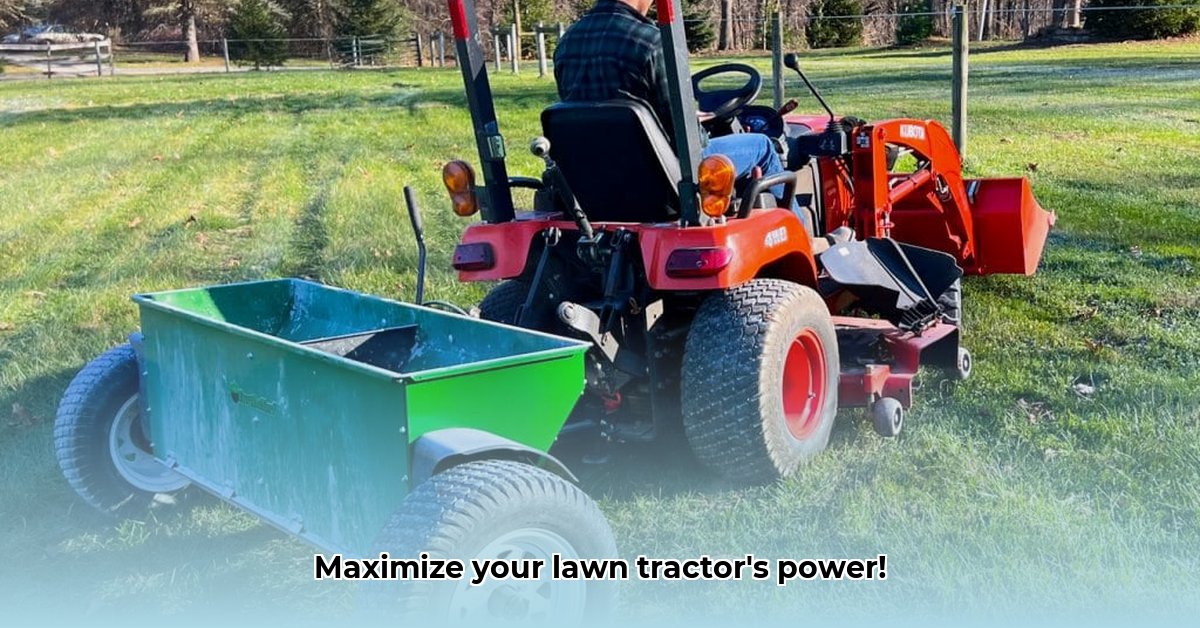
Getting the most from your fertilizer while minimizing environmental impact is crucial for sustainable agriculture. Precise fertilizer application is key, and spreader lawn tractors offer a significant efficiency boost over manual methods. However, understanding how to select and use these machines effectively is paramount to avoiding waste and protecting the environment. This guide provides practical advice on choosing the right spreader and employing best practices for sustainable fertilizer application. For more information on agricultural equipment, check out this helpful resource.
The Role of Pull-Behind Spreaders in Sustainable Agriculture
Pull-behind spreaders offer considerable advantages in fertilizer application efficiency. They significantly reduce the labor and time required compared to manual spreading, allowing farmers to cover more ground in less time. This increased efficiency translates directly into cost savings and improved productivity. However, the potential for over-application and uneven distribution remains a significant concern. Improper use can lead to wasted fertilizer, increased costs, and potential harm to the environment through runoff and soil degradation. Therefore, precision and calibration are crucial for maximizing the benefits of pull-behind spreaders while minimizing their drawbacks. Further research is needed to fully understand the long-term impacts of different application techniques on soil health and overall ecosystem sustainability.
Choosing the Right Spreader: A Practical Guide
Selecting the appropriate spreader depends on several factors, including farm size, budget, and specific fertilizer application needs. Consider the following aspects when making your decision:
Farm Size: Smaller farms will likely require a smaller, less expensive spreader with a lower hopper capacity. Larger farms may need higher-capacity models to cover wider areas more efficiently.
Budget: Spreaders range significantly in price, from basic models to advanced, feature-rich machines. Consider your budget and prioritize features that offer the best value for your specific needs. While a higher upfront cost might seem daunting, a precise spreader can save money in the long run by reducing fertilizer waste.
Required Features: Essential features include adjustable settings for precise control over spread width and rate, and calibration tools for ensuring accurate application. Advanced features, such as GPS guidance and variable-rate technology, can further enhance precision and efficiency, though they typically come with a higher price tag.
Here's a simplified comparison of spreader features across different price ranges:
| Feature | Budget-Friendly Spreaders | Mid-Range Spreaders | High-End Spreaders |
|---|---|---|---|
| Calibration | Basic, often manual adjustment needed | More precise settings, possibly digital | Very precise, often automated, maybe GPS-guided |
| Spread Pattern | Simple, fewer adjustment options | More adjustable spread patterns | Highly adjustable, variable rate application |
| Hopper Capacity | Smaller (think 50-75 lbs) | Medium (around 100-150 lbs) | Larger (200+ lbs or even more) |
| Build Quality | Generally made of basic steel | More durable steel, often added features | High-quality materials, resistant to corrosion |
Best Practices for Sustainable Fertilizer Application
Effective and sustainable fertilizer application involves more than just selecting the right equipment. It requires a comprehensive approach that integrates several key practices:
Soil Testing: Conduct a thorough soil test to determine the precise nutrient needs of your soil. This prevents over-application of unnecessary nutrients, reducing waste and protecting the environment.
Spreader Calibration: Meticulously calibrate your spreader according to the manufacturer's instructions. This ensures uniform fertilizer distribution, maximizing efficiency and minimizing waste. Regular calibration checks are crucial, particularly after transportation or maintenance.
Weather Monitoring: Avoid applying fertilizer when rain is imminent, as this can lead to runoff and water contamination. Favor calm, dry conditions for optimal application and nutrient uptake.
Erosion Control: Consider using buffer strips, cover crops, or other erosion control measures to minimize fertilizer runoff and protect water quality.
Maintenance: Regular maintenance, including cleaning and inspection of the spreader, ensures optimal performance and extends the lifespan of your equipment.
Future Trends and Innovations
The field of precision agriculture is constantly evolving, with new technologies promising to further enhance the sustainability and efficiency of fertilizer application. Emerging technologies such as AI-powered spreaders that adjust application rates based on real-time soil analysis, and IoT sensors that monitor environmental factors for optimal operation, are transforming the landscape of agriculture. Government regulations and incentives, designed to promote the adoption of more sustainable practices, are also expected to play a key role in driving innovation and wider adoption of these advanced technologies. The future of sustainable fertilizer application is bright, driven by technology advancements and a growing environmental consciousness.